
Recruitment Challenges Businesses Shouldn’t Have to Handle Alone
Recruitment is essential to business growth — but managing every part of the hiring process internally can become difficult as hiring demands increase.
For growing businesses, HR and internal recruitment teams often find themselves balancing multiple priorities at the same time: sourcing candidates, screening CVs, coordinating interviews, maintaining candidate pipelines, following up with applicants and supporting hiring managers.
When the volume increases, recruitment can quickly become a full-time operational challenge.
This is where 𝗥𝗲𝗰𝗿𝘂𝗶𝘁𝗺𝗲𝗻𝘁 𝗣𝗿𝗼𝗰𝗲𝘀𝘀 𝗢𝘂𝘁𝘀𝗼𝘂𝗿𝗰𝗶𝗻𝗴 (𝗥𝗣𝗢) can provide a practical solution.
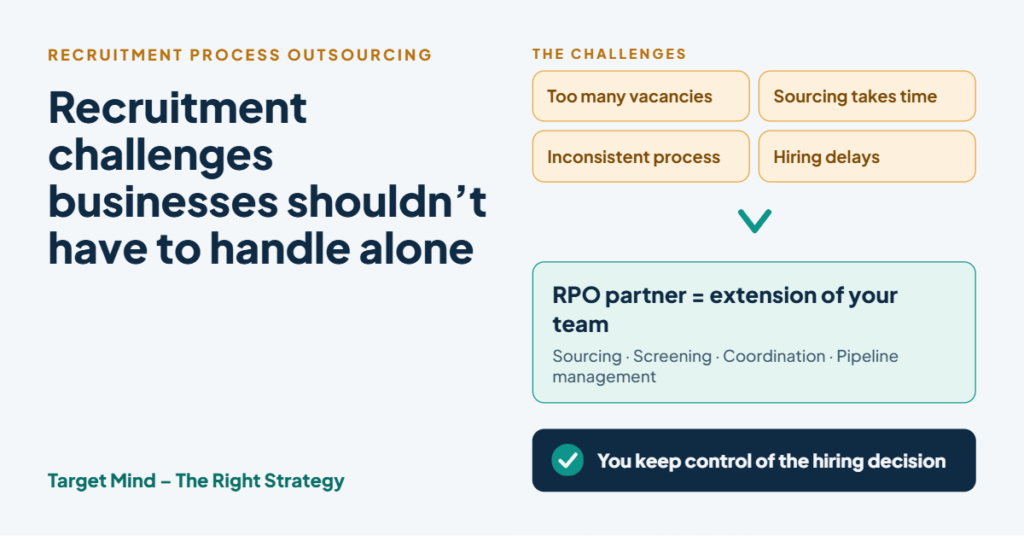
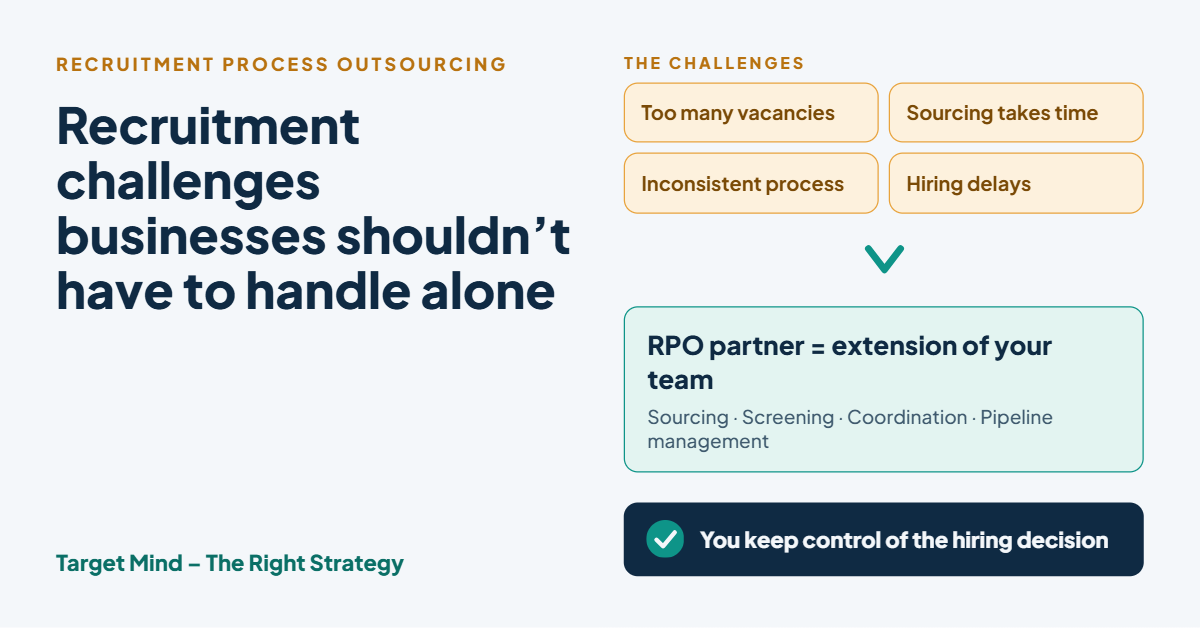
𝗧𝗵𝗲 𝗥𝗲𝗰𝗿𝘂𝗶𝘁𝗺𝗲𝗻𝘁 𝗖𝗵𝗮𝗹𝗹𝗲𝗻𝗴𝗲𝘀 𝗕𝘂𝘀𝗶𝗻𝗲𝘀𝘀𝗲𝘀 𝗖𝗼𝗺𝗺𝗼𝗻𝗹𝘆 𝗙𝗮𝗰𝗲
𝟭. 𝗧𝗼𝗼 𝗠𝗮𝗻𝘆 𝗩𝗮𝗰𝗮𝗻𝗰𝗶𝗲𝘀, 𝗡𝗼𝘁 𝗘𝗻𝗼𝘂𝗴𝗵 𝗥𝗲𝗰𝗿𝘂𝗶𝘁𝗺𝗲𝗻𝘁 𝗖𝗮𝗽𝗮𝗰𝗶𝘁𝘆
A sudden increase in hiring requirements can put significant pressure on an internal recruitment team.
Hiring more recruiters permanently may not always be the right solution, particularly when recruitment volumes fluctuate.
An RPO model allows businesses to add recruitment capacity when they need it, helping them manage increased hiring demand without immediately expanding their permanent internal team.
𝟮. 𝗦𝗼𝘂𝗿𝗰𝗶𝗻𝗴 𝗧𝗮𝗸𝗲𝘀 𝗧𝗶𝗺𝗲
Finding suitable candidates is more than simply posting a vacancy.
Recruiters need to identify relevant talent pools, source candidates, review profiles, conduct initial screening and maintain communication throughout the process.
When internal teams are already stretched, sourcing can become one of the biggest bottlenecks in recruitment.
An RPO team can take responsibility for these activities, allowing internal HR and hiring managers to focus on higher-value decisions.
𝟯. 𝗥𝗲𝗰𝗿𝘂𝗶𝘁𝗺𝗲𝗻𝘁 𝗕𝗲𝗰𝗼𝗺𝗲𝘀 𝗜𝗻𝗰𝗼𝗻𝘀𝗶𝘀𝘁𝗲𝗻𝘁
When recruitment is managed across different teams, locations or hiring managers, processes can become inconsistent.
Different screening approaches, candidate communication and follow-up processes can affect both efficiency and candidate experience.
A structured RPO model can introduce greater consistency across the recruitment process, with defined workflows, screening criteria, reporting and accountability.
𝟰. 𝗛𝗶𝗿𝗶𝗻𝗴 𝗗𝗲𝗹𝗮𝘆𝘀 𝗔𝗳𝗳𝗲𝗰𝘁 𝗕𝘂𝘀𝗶𝗻𝗲𝘀𝘀 𝗚𝗿𝗼𝘄𝘁𝗵
An open position is more than an empty seat.
When critical roles remain vacant for too long, existing employees may carry additional workloads, projects can slow down and business growth can be affected.
RPO provides dedicated recruitment capacity that can help businesses maintain momentum and improve time-to-fill by keeping recruitment activity focused and organised.
𝗥𝗣𝗢 𝗜𝘀 𝗠𝗼𝗿𝗲 𝗧𝗵𝗮𝗻 𝗦𝗶𝗺𝗽𝗹𝘆 𝗙𝗶𝗻𝗱𝗶𝗻𝗴 𝗖𝗮𝗻𝗱𝗶𝗱𝗮𝘁𝗲𝘀
One of the biggest misconceptions about RPO is that it simply means outsourcing CV sourcing.
A well-designed RPO partnership can support much more of the recruitment lifecycle.
Depending on the business requirement, this may include:
• Recruitment strategy and planning
• Candidate sourcing
• CV screening
• Initial candidate assessments
• Interview coordination
• Candidate engagement and follow-ups
• Recruitment administration
• Pipeline management
• Recruitment reporting
• Onboarding support
The exact scope can be adapted according to the organisation’s requirements.
𝗬𝗼𝘂𝗿 𝗕𝘂𝘀𝗶𝗻𝗲𝘀𝘀 𝗦𝘁𝗶𝗹𝗹 𝗖𝗼𝗻𝘁𝗿𝗼𝗹𝘀 𝘁𝗵𝗲 𝗛𝗶𝗿𝗶𝗻𝗴 𝗗𝗲𝗰𝗶𝘀𝗶𝗼𝗻
Outsourcing recruitment does not mean giving away control of your hiring.
The business can continue to define:
• Who it wants to hire
• The required skills and experience
• Cultural and role requirements
• Interview stages
• Final candidate selection
• Offer and employment decisions
The RPO partner provides the recruitment capacity and process support needed to move candidates through the pipeline efficiently.
In other words, 𝘁𝗵𝗲 𝗿𝗲𝗰𝗿𝘂𝗶𝘁𝗺𝗲𝗻𝘁 𝘄𝗼𝗿𝗸𝗹𝗼𝗮𝗱 𝗰𝗮𝗻 𝗯𝗲 𝘀𝗵𝗮𝗿𝗲𝗱 𝘄𝗶𝘁𝗵𝗼𝘂𝘁 𝗴𝗶𝘃𝗶𝗻𝗴 𝘂𝗽 𝗰𝗼𝗻𝘁𝗿𝗼𝗹.
𝗪𝗵𝗲𝗻 𝗦𝗵𝗼𝘂𝗹𝗱 𝗮 𝗕𝘂𝘀𝗶𝗻𝗲𝘀𝘀 𝗖𝗼𝗻𝘀𝗶𝗱𝗲𝗿 𝗥𝗣𝗢?
RPO can be particularly useful when a business is:
• Hiring continuously
• Experiencing rapid growth
• Managing multiple vacancies
• Entering a new market
• Expanding into new locations
• Experiencing recruiter capacity issues
• Looking to improve recruitment processes
• Facing inconsistent candidate pipelines
• Looking for flexible recruitment support
RPO is not necessarily the right solution for every business. It tends to create the greatest value where recruitment demand is sustained, complex or difficult for the existing team to manage alone.
𝗧𝗵𝗲 𝗥𝗶𝗴𝗵𝘁 𝗥𝗣𝗢 𝗣𝗮𝗿𝘁𝗻𝗲𝗿 𝗕𝗲𝗰𝗼𝗺𝗲𝘀 𝗮𝗻 𝗘𝘅𝘁𝗲𝗻𝘀𝗶𝗼𝗻 𝗼𝗳 𝗬𝗼𝘂𝗿 𝗧𝗲𝗮𝗺
The most effective RPO relationships are not simply about handing over recruitment tasks.
They are about collaboration.
The RPO team should understand the company’s requirements, employer brand, hiring priorities and recruitment process. They should work alongside internal stakeholders rather than operating as a disconnected external supplier.
This creates a more joined-up recruitment function where internal teams maintain strategic control while the RPO team provides the additional capacity and execution needed to keep hiring moving.
𝗥𝗲𝗰𝗿𝘂𝗶𝘁𝗺𝗲𝗻𝘁 𝗗𝗼𝗲𝘀𝗻’𝘁 𝗛𝗮𝘃𝗲 𝘁𝗼 𝗕𝗲𝗰𝗼𝗺𝗲 𝗮 𝗕𝘂𝘀𝗶𝗻𝗲𝘀𝘀 𝗕𝗼𝘁𝘁𝗹𝗲𝗻𝗲𝗰𝗸
Businesses should be able to focus on growth, customers, operations and their people — without recruitment becoming an unnecessary operational burden.
When hiring requirements increase, having the right recruitment support can make the difference between constantly reacting to vacancies and building a structured, scalable hiring process.
𝗥𝗣𝗢 𝗴𝗶𝘃𝗲𝘀 𝗯𝘂𝘀𝗶𝗻𝗲𝘀𝘀𝗲𝘀 𝗮𝗻𝗼𝘁𝗵𝗲𝗿 𝗼𝗽𝘁𝗶𝗼𝗻: 𝗸𝗲𝗲𝗽 𝗰𝗼𝗻𝘁𝗿𝗼𝗹 𝗼𝗳 𝗵𝗶𝗿𝗶𝗻𝗴 𝘄𝗵𝗶𝗹𝗲 𝗴𝗮𝗶𝗻𝗶𝗻𝗴 𝘁𝗵𝗲 𝗿𝗲𝗰𝗿𝘂𝗶𝘁𝗺𝗲𝗻𝘁 𝗰𝗮𝗽𝗮𝗰𝗶𝘁𝘆 𝘁𝗼 𝗺𝗮𝗻𝗮𝗴𝗲 𝗴𝗿𝗼𝘄𝘁𝗵.
Because recruitment challenges are easier to solve when you don’t have to solve them alone.
𝗛𝗼𝘄 𝗧𝗮𝗿𝗴𝗲𝘁 𝗠𝗶𝗻𝗱 𝗖𝗮𝗻 𝗛𝗲𝗹𝗽
At 𝗧𝗮𝗿𝗴𝗲𝘁 𝗠𝗶𝗻𝗱, we provide flexible RPO support designed around the recruitment requirements of each business.
From sourcing and screening to recruitment coordination and ongoing pipeline management, our team can work as an extension of your existing recruitment function.
𝗧𝗵𝗲 𝗿𝗶𝗴𝗵𝘁 𝗿𝗲𝗰𝗿𝘂𝗶𝘁𝗺𝗲𝗻𝘁 𝘀𝘁𝗿𝗮𝘁𝗲𝗴𝘆 𝗶𝘀𝗻’𝘁 𝗮𝗯𝗼𝘂𝘁 𝗱𝗼𝗶𝗻𝗴 𝗲𝘃𝗲𝗿𝘆𝘁𝗵𝗶𝗻𝗴 𝗶𝗻𝘁𝗲𝗿𝗻𝗮𝗹𝗹𝘆. 𝗜𝘁’𝘀 𝗮𝗯𝗼𝘂𝘁 𝗵𝗮𝘃𝗶𝗻𝗴 𝘁𝗵𝗲 𝗿𝗶𝗴𝗵𝘁 𝘀𝘂𝗽𝗽𝗼𝗿𝘁 𝘄𝗵𝗲𝗿𝗲 𝘆𝗼𝘂 𝗻𝗲𝗲𝗱 𝗶𝘁.
𝗧𝗮𝗿𝗴𝗲𝘁 𝗠𝗶𝗻𝗱 – 𝗧𝗵𝗲 𝗥𝗶𝗴𝗵𝘁 𝗦𝘁𝗿𝗮𝘁𝗲𝗴𝘆