
The Difference Between Completing a Task and Owning an Outcome in KPO
Knowledge Process Outsourcing (KPO) has evolved far beyond simply assigning work to an offshore team and measuring how many tasks are completed.
Today, businesses expect more from their KPO partners.
They want accuracy, efficiency, accountability, proactive communication and, most importantly, 𝗯𝘂𝘀𝗶𝗻𝗲𝘀𝘀 𝗼𝘂𝘁𝗰𝗼𝗺𝗲𝘀.
This creates an important distinction:
𝗜𝘀 𝘆𝗼𝘂𝗿 𝗞𝗣𝗢 𝗽𝗮𝗿𝘁𝗻𝗲𝗿 𝘀𝗶𝗺𝗽𝗹𝘆 𝗰𝗼𝗺𝗽𝗹𝗲𝘁𝗶𝗻𝗴 𝘁𝗵𝗲 𝘁𝗮𝘀𝗸𝘀 𝗮𝘀𝘀𝗶𝗴𝗻𝗲𝗱 𝘁𝗼 𝘁𝗵𝗲𝗺, 𝗼𝗿 𝗮𝗿𝗲 𝘁𝗵𝗲𝘆 𝘁𝗮𝗸𝗶𝗻𝗴 𝗼𝘄𝗻𝗲𝗿𝘀𝗵𝗶𝗽 𝗼𝗳 𝘁𝗵𝗲 𝗼𝘂𝘁𝗰𝗼𝗺𝗲 𝘁𝗵𝗼𝘀𝗲 𝘁𝗮𝘀𝗸𝘀 𝗮𝗿𝗲 𝗺𝗲𝗮𝗻𝘁 𝘁𝗼 𝗱𝗲𝗹𝗶𝘃𝗲𝗿?
The difference may sound small, but it can have a significant impact on the value an outsourcing partnership creates.
𝗪𝗵𝗮𝘁 𝗗𝗼𝗲𝘀 𝗧𝗮𝘀𝗸 𝗖𝗼𝗺𝗽𝗹𝗲𝘁𝗶𝗼𝗻 𝗠𝗲𝗮𝗻?
Task completion is focused on execution.
A team receives an assignment, follows the defined process, completes the activity and reports it as finished.
For example, a KPO team may be responsible for:
• Conducting market research
• Processing and validating data
• Preparing reports
• Supporting compliance activities
• Performing financial analysis
• Managing documentation
• Updating databases
• Conducting research and analysis
All of these activities can be measured through productivity metrics such as volume, turnaround time and completion rates.
These metrics are important.
However, they do not always tell the full story.
A report can be completed on time but contain information that is not relevant.
A database can be updated quickly but contain inaccuracies.
A research project can be delivered according to the brief but fail to answer the questions that matter to the client.
This is where 𝗼𝘂𝘁𝗰𝗼𝗺𝗲 𝗼𝘄𝗻𝗲𝗿𝘀𝗵𝗶𝗽 becomes important.
𝗪𝗵𝗮𝘁 𝗗𝗼𝗲𝘀 𝗢𝘄𝗻𝗶𝗻𝗴 𝗮𝗻 𝗢𝘂𝘁𝗰𝗼𝗺𝗲 𝗠𝗲𝗮𝗻?
Outcome ownership means understanding the purpose behind the task and taking responsibility for the quality and usefulness of the final result.
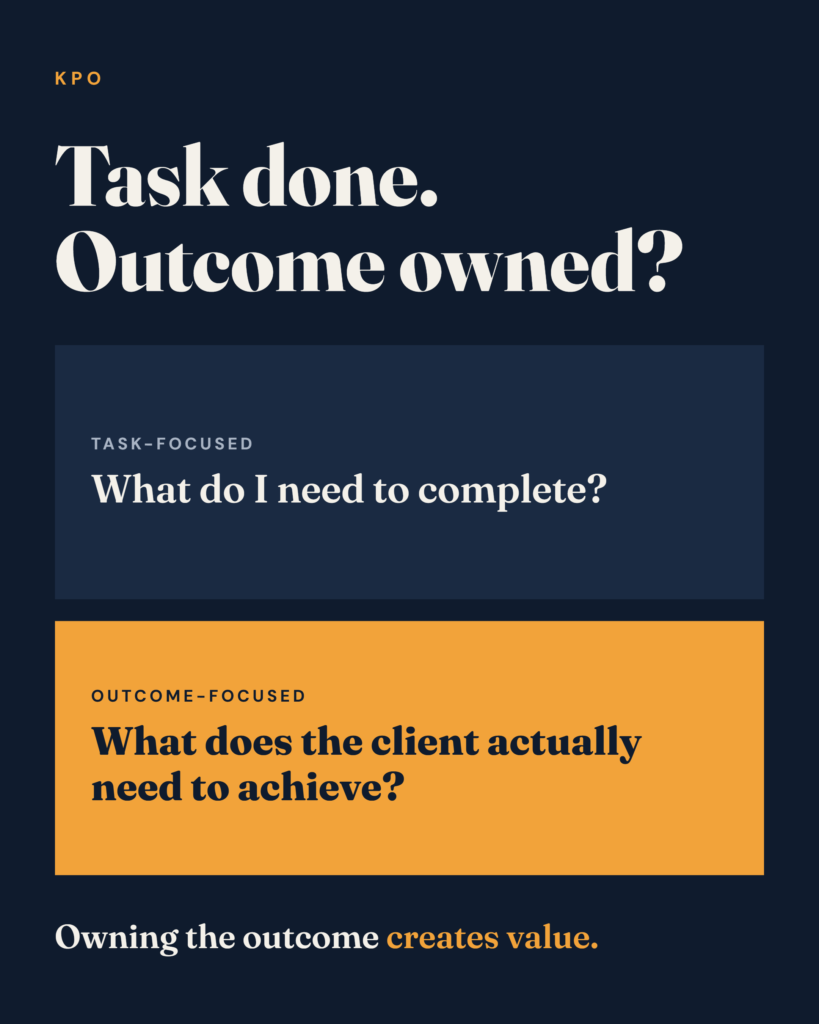
Instead of asking:
“𝗪𝗵𝗮𝘁 𝘁𝗮𝘀𝗸 𝗱𝗼 𝗜 𝗻𝗲𝗲𝗱 𝘁𝗼 𝗰𝗼𝗺𝗽𝗹𝗲𝘁𝗲?”
the team asks:
“𝗪𝗵𝗮𝘁 𝗶𝘀 𝘁𝗵𝗲 𝗰𝗹𝗶𝗲𝗻𝘁 𝘁𝗿𝘆𝗶𝗻𝗴 𝘁𝗼 𝗮𝗰𝗵𝗶𝗲𝘃𝗲, 𝗮𝗻𝗱 𝗵𝗼𝘄 𝗰𝗮𝗻 𝗺𝘆 𝘄𝗼𝗿𝗸 𝗰𝗼𝗻𝘁𝗿𝗶𝗯𝘂𝘁𝗲 𝘁𝗼 𝘁𝗵𝗮𝘁 𝗼𝗯𝗷𝗲𝗰𝘁𝗶𝘃𝗲?”
This requires a deeper level of involvement.
An outcome-focused KPO professional does not simply follow instructions. They understand the context, identify potential problems, ask relevant questions, highlight risks and look for opportunities to improve the process.
The objective is not just to finish the work.
𝗧𝗵𝗲 𝗼𝗯𝗷𝗲𝗰𝘁𝗶𝘃𝗲 𝗶𝘀 𝘁𝗼 𝗺𝗮𝗸𝗲 𝘁𝗵𝗲 𝘄𝗼𝗿𝗸 𝘂𝘀𝗲𝗳𝘂𝗹.
𝗪𝗵𝘆 𝗢𝘂𝘁𝗰𝗼𝗺𝗲 𝗢𝘄𝗻𝗲𝗿𝘀𝗵𝗶𝗽 𝗠𝗮𝘁𝘁𝗲𝗿𝘀 𝗶𝗻 𝗞𝗣𝗢
KPO is different from purely transactional outsourcing because it often involves knowledge, analysis, judgement and decision support.
Clients may rely on their offshore teams to provide information that influences important business decisions.
That makes quality and accountability critical.
Consider a company using an offshore KPO team for market research.
A task-focused team might:
- Receive the research requirements.
- Collect the requested information.
- Prepare the report.
- Submit it to the client.
An outcome-focused team may do more:
- Understand why the client needs the research.
- Identify the most relevant information sources.
- Validate important data.
- Identify gaps or inconsistencies.
- Highlight significant market developments.
- Present findings in a way that supports decision-making.
- Suggest areas that may require further investigation.
Both teams have technically completed the task.
But only one has truly 𝗼𝘄𝗻𝗲𝗱 𝘁𝗵𝗲 𝗼𝘂𝘁𝗰𝗼𝗺𝗲.
𝗙𝗿𝗼𝗺 𝗣𝗿𝗼𝗰𝗲𝘀𝘀 𝗙𝗼𝗹𝗹𝗼𝘄𝗶𝗻𝗴 𝘁𝗼 𝗣𝗿𝗼𝗰𝗲𝘀𝘀 𝗨𝗻𝗱𝗲𝗿𝘀𝘁𝗮𝗻𝗱𝗶𝗻𝗴
Processes are essential in KPO.
Standard Operating Procedures, workflows and quality controls help maintain consistency.
But following a process should not mean switching off judgement.
An experienced KPO team should understand both 𝘄𝗵𝗮𝘁 𝘁𝗵𝗲 𝗽𝗿𝗼𝗰𝗲𝘀𝘀 𝘀𝗮𝘆𝘀 and 𝘄𝗵𝘆 𝘁𝗵𝗲 𝗽𝗿𝗼𝗰𝗲𝘀𝘀 𝗲𝘅𝗶𝘀𝘁𝘀.
This allows the team to recognise when something does not look right.
For example, if a data analyst notices a recurring discrepancy in a client’s dataset, simply correcting individual records may solve the immediate task.
An outcome-driven team may ask:
𝗪𝗵𝘆 𝗱𝗼𝗲𝘀 𝘁𝗵𝗶𝘀 𝗱𝗶𝘀𝗰𝗿𝗲𝗽𝗮𝗻𝗰𝘆 𝗸𝗲𝗲𝗽 𝗵𝗮𝗽𝗽𝗲𝗻𝗶𝗻𝗴?
If the root cause can be identified, the team may help prevent the same issue from recurring.
That creates a much greater value than simply correcting individual errors.
𝗠𝗲𝗮𝘀𝘂𝗿𝗶𝗻𝗴 𝗣𝗿𝗼𝗱𝘂𝗰𝘁𝗶𝘃𝗶𝘁𝘆 𝘃𝘀. 𝗠𝗲𝗮𝘀𝘂𝗿𝗶𝗻𝗴 𝗜𝗺𝗽𝗮𝗰𝘁
Traditional outsourcing metrics often focus on productivity:
- Number of tasks completed
- Number of records processed
- Turnaround time
- Attendance
- SLA compliance
These metrics remain important.
But KPO performance should also consider:
- Accuracy
- Quality
- Relevance
- Problem-solving
- Process improvement
- Proactive communication
- Client satisfaction
- Business impact
A high-volume team is not necessarily a high-performing team.
Productivity tells you how much work was completed.
Outcome measurement tells you how valuable that work was.
The strongest KPO partnerships measure both.
𝗪𝗵𝗮𝘁 𝗢𝘂𝘁𝗰𝗼𝗺𝗲 𝗢𝘄𝗻𝗲𝗿𝘀𝗵𝗶𝗽 𝗟𝗼𝗼𝗸𝘀 𝗟𝗶𝗸𝗲 𝗶𝗻 𝗮𝗻 𝗢𝗳𝗳𝘀𝗵𝗼𝗿𝗲 𝗞𝗣𝗢 𝗧𝗲𝗮𝗺
Outcome ownership can be seen in everyday behaviour.
𝟭. 𝗣𝗿𝗼𝗮𝗰𝘁𝗶𝘃𝗲 𝗖𝗼𝗺𝗺𝘂𝗻𝗶𝗰𝗮𝘁𝗶𝗼𝗻
The team does not wait for the client to discover an issue.
Potential delays, data concerns, quality risks or process challenges are communicated early.
𝟮. 𝗔𝗰𝗰𝗼𝘂𝗻𝘁𝗮𝗯𝗶𝗹𝗶𝘁𝘆
When something goes wrong, the focus is not simply on explaining who was responsible.
The focus is on resolving the issue and preventing it from happening again.
𝟯. 𝗕𝘂𝘀𝗶𝗻𝗲𝘀𝘀 𝗨𝗻𝗱𝗲𝗿𝘀𝘁𝗮𝗻𝗱𝗶𝗻𝗴
The team understands how its work connects with the client’s wider business objectives.
This allows employees to make better decisions within the scope of their responsibilities.
𝟰. 𝗖𝗼𝗻𝘁𝗶𝗻𝘂𝗼𝘂𝘀 𝗜𝗺𝗽𝗿𝗼𝘃𝗲𝗺𝗲𝗻𝘁
The team identifies repetitive problems and looks for ways to make the process faster, more accurate or more efficient.
𝟱. 𝗤𝘂𝗮𝗹𝗶𝘁𝘆 𝗢𝘄𝗻𝗲𝗿𝘀𝗵𝗶𝗽
Quality is not treated as the responsibility of a separate QA department.
Every member of the team understands that the quality of their output matters.
𝗪𝗵𝘆 𝗖𝗹𝗶𝗲𝗻𝘁𝘀 𝗩𝗮𝗹𝘂𝗲 𝗢𝘂𝘁𝗰𝗼𝗺𝗲-𝗙𝗼𝗰𝘂𝘀𝗲𝗱 𝗞𝗣𝗢 𝗣𝗮𝗿𝘁𝗻𝗲𝗿𝘀
When a client outsources a knowledge-based process, they are not simply buying additional working hours.
They are looking for capability.
They want a partner who can help them manage workload while maintaining standards and supporting business objectives.
An outcome-focused KPO team can provide:
𝗚𝗿𝗲𝗮𝘁𝗲𝗿 𝗿𝗲𝗹𝗶𝗮𝗯𝗶𝗹𝗶𝘁𝘆 — because the team takes responsibility for the final result.
𝗕𝗲𝘁𝘁𝗲𝗿 𝗱𝗲𝗰𝗶𝘀𝗶𝗼𝗻 𝘀𝘂𝗽𝗽𝗼𝗿𝘁 — because information is analysed and presented with context.
𝗜𝗺𝗽𝗿𝗼𝘃𝗲𝗱 𝗲𝗳𝗳𝗶𝗰𝗶𝗲𝗻𝗰𝘆 — because recurring process issues are identified and addressed.
𝗕𝗲𝘁𝘁𝗲𝗿 𝘀𝗰𝗮𝗹𝗮𝗯𝗶𝗹𝗶𝘁𝘆 — because the team understands processes rather than simply performing isolated tasks.
𝗦𝘁𝗿𝗼𝗻𝗴𝗲𝗿 𝗽𝗮𝗿𝘁𝗻𝗲𝗿𝘀𝗵𝗶𝗽𝘀 — because communication and accountability create trust.
𝗛𝗼𝘄 𝗕𝘂𝘀𝗶𝗻𝗲𝘀𝘀𝗲𝘀 𝗖𝗮𝗻 𝗕𝘂𝗶𝗹𝗱 𝗮𝗻 𝗢𝘂𝘁𝗰𝗼𝗺𝗲-𝗗𝗿𝗶𝘃𝗲𝗻 𝗞𝗣𝗢 𝗠𝗼𝗱𝗲𝗹
Businesses can encourage outcome ownership by setting clear expectations from the beginning.
Instead of defining a KPO role only through a list of tasks, clients should also communicate:
• The purpose of the process
• Expected business outcomes
• Quality standards
• Key performance indicators
• Escalation procedures
• Decision-making boundaries
• Communication expectations
• Opportunities for process improvement
The KPO provider should then align its team around those objectives.
This creates a partnership where the offshore team understands not just 𝘄𝗵𝗮𝘁 𝘁𝗼 𝗱𝗼, but 𝘄𝗵𝘆 𝗶𝘁 𝗺𝗮𝘁𝘁𝗲𝗿𝘀.
𝗧𝗵𝗲 𝗥𝗲𝗮𝗹 𝗩𝗮𝗹𝘂𝗲 𝗼𝗳 𝗞𝗣𝗢
The future of KPO is not about moving more tasks offshore.
It is about creating 𝗺𝗼𝗿𝗲 𝘃𝗮𝗹𝘂𝗲 𝘁𝗵𝗿𝗼𝘂𝗴𝗵 𝘀𝗽𝗲𝗰𝗶𝗮𝗹𝗶𝘀𝗲𝗱 𝗸𝗻𝗼𝘄𝗹𝗲𝗱𝗴𝗲, 𝘀𝗸𝗶𝗹𝗹𝗲𝗱 𝗽𝗲𝗼𝗽𝗹𝗲, 𝘁𝗲𝗰𝗵𝗻𝗼𝗹𝗼𝗴𝘆 𝗮𝗻𝗱 𝗮𝗰𝗰𝗼𝘂𝗻𝘁𝗮𝗯𝗶𝗹𝗶𝘁𝘆.
Automation can increasingly handle repetitive work.
AI can accelerate research and data processing.
Technology can improve visibility and reporting.
But businesses will continue to need people who can interpret information, recognise problems, apply judgement and take ownership.
That is where a strong KPO partner can make a meaningful difference.
𝗙𝗶𝗻𝗮𝗹 𝗧𝗵𝗼𝘂𝗴𝗵𝘁
There is a fundamental difference between saying:
“𝗧𝗵𝗲 𝘁𝗮𝘀𝗸 𝗵𝗮𝘀 𝗯𝗲𝗲𝗻 𝗰𝗼𝗺𝗽𝗹𝗲𝘁𝗲𝗱.”
and saying:
“𝗧𝗵𝗲 𝗼𝘂𝘁𝗰𝗼𝗺𝗲 𝗵𝗮𝘀 𝗯𝗲𝗲𝗻 𝗮𝗰𝗵𝗶𝗲𝘃𝗲𝗱.”
The first demonstrates activity.
The second demonstrates accountability.
For businesses evaluating KPO providers, that distinction is worth paying attention to.
Because the best KPO partnerships are not built around task completion alone.
They are built around 𝗼𝘄𝗻𝗲𝗿𝘀𝗵𝗶𝗽, 𝗾𝘂𝗮𝗹𝗶𝘁𝘆, 𝗰𝗼𝗻𝘁𝗶𝗻𝘂𝗼𝘂𝘀 𝗶𝗺𝗽𝗿𝗼𝘃𝗲𝗺𝗲𝗻𝘁 𝗮𝗻𝗱 𝗺𝗲𝗮𝘀𝘂𝗿𝗮𝗯𝗹𝗲 𝗯𝘂𝘀𝗶𝗻𝗲𝘀𝘀 𝘃𝗮𝗹𝘂𝗲.
𝗖𝗼𝗺𝗽𝗹𝗲𝘁𝗶𝗻𝗴 𝗮 𝘁𝗮𝘀𝗸 𝗱𝗲𝗹𝗶𝘃𝗲𝗿𝘀 𝗮𝗻 𝗮𝗰𝘁𝗶𝘃𝗶𝘁𝘆.
𝗢𝘄𝗻𝗶𝗻𝗴 𝘁𝗵𝗲 𝗼𝘂𝘁𝗰𝗼𝗺𝗲 𝗱𝗲𝗹𝗶𝘃𝗲𝗿𝘀 𝗶𝗺𝗽𝗮𝗰𝘁.