
Doing everything in-house can feel like the safest approach.
You have direct control over your people, processes and information. Your team is close to the work, decisions can be made internally, and there is a sense that keeping everything under one roof gives the business greater control.
But there is another side to the equation that businesses sometimes overlook:
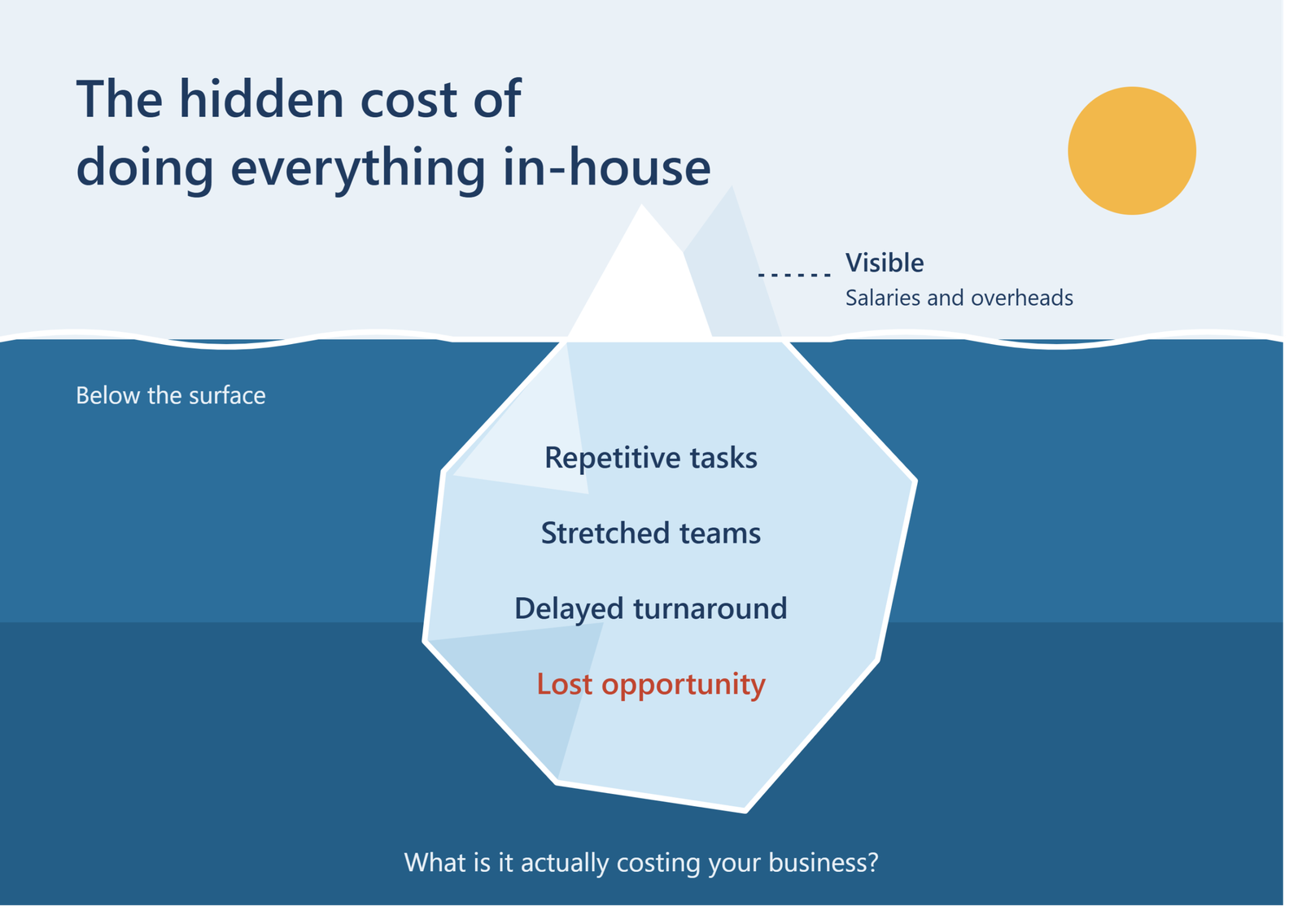
𝗪𝗵𝗮𝘁 𝗶𝘀 𝗱𝗼𝗶𝗻𝗴 𝗲𝘃𝗲𝗿𝘆𝘁𝗵𝗶𝗻𝗴 𝗶𝗻-𝗵𝗼𝘂𝘀𝗲 𝗮𝗰𝘁𝘂𝗮𝗹𝗹𝘆 𝗰𝗼𝘀𝘁𝗶𝗻𝗴 𝘆𝗼𝘂𝗿 𝗯𝘂𝘀𝗶𝗻𝗲𝘀𝘀?
The cost is not always visible on a balance sheet.
It can appear as hours spent on repetitive tasks, increasing operational overhead, stretched teams, delayed turnaround times and employees spending valuable time on activities that do not require their highest level of expertise.
This is where 𝗞𝗻𝗼𝘄𝗹𝗲𝗱𝗴𝗲 𝗣𝗿𝗼𝗰𝗲𝘀𝘀 𝗢𝘂𝘁𝘀𝗼𝘂𝗿𝗰𝗶𝗻𝗴 (𝗞𝗣𝗢) can provide a different approach.
𝗞𝗣𝗢 𝗜𝘀 𝗠𝗼𝗿𝗲 𝗧𝗵𝗮𝗻 𝗖𝗼𝘀𝘁 𝗥𝗲𝗱𝘂𝗰𝘁𝗶𝗼𝗻
KPO is often associated with reducing operational costs, but that is only one part of its potential value.
At its core, KPO allows businesses to access specialised knowledge and operational support for processes that require expertise, research, analysis, coordination or domain knowledge.
The objective is not simply to move work outside the organisation.
It is to 𝗮𝗹𝗹𝗼𝗰𝗮𝘁𝗲 𝘄𝗼𝗿𝗸 𝗺𝗼𝗿𝗲 𝘀𝘁𝗿𝗮𝘁𝗲𝗴𝗶𝗰𝗮𝗹𝗹𝘆.
When the right processes are supported by a specialised external team, internal employees can spend more time focusing on activities where their experience, decision-making and business knowledge create the greatest value.
𝗧𝗵𝗲 𝗛𝗶𝗱𝗱𝗲𝗻 𝗖𝗼𝘀𝘁 𝗼𝗳 𝗜𝗻𝘁𝗲𝗿𝗻𝗮𝗹 𝗣𝗿𝗼𝗰𝗲𝘀𝘀𝗲𝘀
Consider how much time an internal team may spend on activities such as:
• Research and data collection
• Database management
• Lead generation and prospect research
• Compliance and documentation
• Reporting and administrative support
• Market research
• Data processing and analysis
• Candidate sourcing
• Back-office operational tasks
• Routine knowledge-based processes
Individually, these activities may not appear significant.
But collectively, they can consume hundreds of hours across a year.
The bigger question is whether those hours are being spent by the 𝗿𝗶𝗴𝗵𝘁 𝗽𝗲𝗼𝗽𝗹𝗲.
If experienced employees are spending a significant portion of their working day on repetitive or process-driven activities, the business may be paying for expertise that is not being fully utilised.
𝗧𝗵𝗲 𝗢𝗽𝗽𝗼𝗿𝘁𝘂𝗻𝗶𝘁𝘆 𝗖𝗼𝘀𝘁 𝗼𝗳 𝗗𝗼𝗶𝗻𝗴 𝗘𝘃𝗲𝗿𝘆𝘁𝗵𝗶𝗻𝗴 𝗜𝗻𝘁𝗲𝗿𝗻𝗮𝗹𝗹𝘆
The biggest cost may not be the salary associated with a particular task.
It may be the 𝗼𝗽𝗽𝗼𝗿𝘁𝘂𝗻𝗶𝘁𝘆 𝗰𝗼𝘀𝘁.
What could your internal team accomplish if they had more time?
Could your sales team spend more time developing client relationships?
Could managers focus more on strategy and team development?
Could subject-matter experts work on higher-value projects?
Could leadership spend more time on business growth instead of operational follow-ups?
These questions help shift the conversation from:
“𝗛𝗼𝘄 𝗺𝘂𝗰𝗵 𝗱𝗼𝗲𝘀 𝗼𝘂𝘁𝘀𝗼𝘂𝗿𝗰𝗶𝗻𝗴 𝗰𝗼𝘀𝘁?”
to:
“𝗪𝗵𝗮𝘁 𝘃𝗮𝗹𝘂𝗲 𝗰𝗼𝘂𝗹𝗱 𝗼𝘂𝗿 𝗶𝗻𝘁𝗲𝗿𝗻𝗮𝗹 𝘁𝗲𝗮𝗺 𝗰𝗿𝗲𝗮𝘁𝗲 𝗶𝗳 𝘁𝗵𝗲𝘆 𝗵𝗮𝗱 𝗺𝗼𝗿𝗲 𝗰𝗮𝗽𝗮𝗰𝗶𝘁𝘆?”
𝗦𝗰𝗮𝗹𝗶𝗻𝗴 𝗖𝗮𝗻 𝗕𝗲𝗰𝗼𝗺𝗲 𝗗𝗶𝗳𝗳𝗶𝗰𝘂𝗹𝘁
Another challenge with managing everything internally is scalability.
Workloads rarely remain constant.
A business may experience seasonal demand, new client acquisition, market expansion or a sudden increase in operational requirements.
Hiring a permanent internal team for every increase in workload may not always be practical.
Recruitment takes time. Training takes time. Management capacity is required. And when the workload eventually decreases, the additional internal capacity may no longer be necessary.
KPO can provide a more flexible model by allowing businesses to access specialised support according to their operational requirements.
This can help businesses respond to changing workloads without constantly rebuilding their internal structure.
𝗦𝘂𝗽𝗽𝗼𝗿𝘁𝗶𝗻𝗴 𝗬𝗼𝘂𝗿 𝗧𝗲𝗮𝗺 𝗥𝗮𝘁𝗵𝗲𝗿 𝗧𝗵𝗮𝗻 𝗥𝗲𝗽𝗹𝗮𝗰𝗶𝗻𝗴 𝗧𝗵𝗲𝗺
One of the biggest misconceptions about outsourcing is that it is necessarily about replacing internal employees.
It doesn’t have to be.
A well-designed KPO model can 𝘀𝘂𝗽𝗽𝗼𝗿𝘁 𝗶𝗻𝘁𝗲𝗿𝗻𝗮𝗹 𝘁𝗲𝗮𝗺𝘀 𝗿𝗮𝘁𝗵𝗲𝗿 𝘁𝗵𝗮𝗻 𝗿𝗲𝗽𝗹𝗮𝗰𝗲 𝘁𝗵𝗲𝗺.
For example, an internal team may remain responsible for:
• Strategy
• Client relationships
• Decision-making
• Quality oversight
• Business development
• Complex or sensitive activities
While a specialised KPO team can support the processes that enable those functions to operate efficiently.
This creates a model where internal and external teams complement each other.
𝗧𝗵𝗲 𝗥𝗶𝗴𝗵𝘁 𝗪𝗼𝗿𝗸 𝗳𝗼𝗿 𝘁𝗵𝗲 𝗥𝗶𝗴𝗵𝘁 𝗧𝗲𝗮𝗺
The most effective outsourcing decisions start with understanding the work itself.
Not every process should be outsourced.
Some activities are closely connected to your company’s strategy, culture or customer relationships and should remain internal.
Other processes may be highly structured, repeatable, knowledge-based or resource-intensive and could be handled effectively by a specialised external team.
The goal is therefore not to outsource everything.
𝗧𝗵𝗲 𝗴𝗼𝗮𝗹 𝗶𝘀 𝘁𝗼 𝗱𝗲𝘁𝗲𝗿𝗺𝗶𝗻𝗲 𝘄𝗵𝗮𝘁 𝘀𝗵𝗼𝘂𝗹𝗱 𝗿𝗲𝗺𝗮𝗶𝗻 𝗶𝗻-𝗵𝗼𝘂𝘀𝗲 𝗮𝗻𝗱 𝘄𝗵𝗮𝘁 𝗰𝗮𝗻 𝗯𝗲 𝗺𝗮𝗻𝗮𝗴𝗲𝗱 𝗺𝗼𝗿𝗲 𝗲𝗳𝗳𝗶𝗰𝗶𝗲𝗻𝘁𝗹𝘆 𝘁𝗵𝗿𝗼𝘂𝗴𝗵 𝘀𝗽𝗲𝗰𝗶𝗮𝗹𝗶𝘀𝗲𝗱 𝘀𝘂𝗽𝗽𝗼𝗿𝘁.
𝗞𝗣𝗢 𝗮𝗻𝗱 𝗕𝘂𝘀𝗶𝗻𝗲𝘀𝘀 𝗙𝗼𝗰𝘂𝘀
When routine knowledge processes are managed effectively, internal teams can regain valuable capacity.
That capacity can then be directed towards activities that have a greater impact on business performance.
For a growing company, this could mean more time for sales and client development.
For an established organisation, it could mean greater focus on innovation, strategy and service improvement.
For a specialist team, it could simply mean having enough time to concentrate on the work that requires their expertise.
In each case, the value comes from better allocation of resources.
𝗔𝘀𝗸𝗶𝗻𝗴 𝘁𝗵𝗲 𝗥𝗶𝗴𝗵𝘁 𝗤𝘂𝗲𝘀𝘁𝗶𝗼𝗻
The traditional question businesses ask is:
“𝗖𝗮𝗻 𝘄𝗲 𝗱𝗼 𝘁𝗵𝗶𝘀 𝗶𝗻𝘁𝗲𝗿𝗻𝗮𝗹𝗹𝘆?”
In many cases, the answer will be yes.
But that may not be the most useful question.
A better question is:
“𝗜𝘀 𝘁𝗵𝗶𝘀 𝘁𝗵𝗲 𝗯𝗲𝘀𝘁 𝘂𝘀𝗲 𝗼𝗳 𝗼𝘂𝗿 𝗶𝗻𝘁𝗲𝗿𝗻𝗮𝗹 𝘁𝗲𝗮𝗺’𝘀 𝘁𝗶𝗺𝗲 𝗮𝗻𝗱 𝗲𝘅𝗽𝗲𝗿𝘁𝗶𝘀𝗲?”
That shift in thinking can change how businesses approach operational efficiency.
Doing something internally does not automatically make it more efficient.
And outsourcing something does not automatically make it better.
The right decision depends on the process, the required expertise, the available resources, the expected quality and the long-term objectives of the business.
𝗧𝗵𝗲 𝗙𝘂𝘁𝘂𝗿𝗲 𝗼𝗳 𝗦𝗺𝗮𝗿𝘁𝗲𝗿 𝗕𝘂𝘀𝗶𝗻𝗲𝘀𝘀 𝗢𝗽𝗲𝗿𝗮𝘁𝗶𝗼𝗻𝘀
As businesses continue to focus on efficiency, scalability and productivity, KPO can become an important part of a broader operational strategy.
The most successful businesses will not necessarily be the ones that keep every process internal.
They will be the ones that understand 𝘄𝗵𝗲𝗿𝗲 𝘁𝗵𝗲𝗶𝗿 𝗽𝗲𝗼𝗽𝗹𝗲 𝗰𝗿𝗲𝗮𝘁𝗲 𝘁𝗵𝗲 𝗺𝗼𝘀𝘁 𝘃𝗮𝗹𝘂𝗲 and build the right support structure around them.
KPO can help create that structure by providing specialised expertise, operational capacity and process support where it makes sense.
Ultimately, the objective is simple:
𝗟𝗲𝘁 𝘆𝗼𝘂𝗿 𝗶𝗻𝘁𝗲𝗿𝗻𝗮𝗹 𝘁𝗲𝗮𝗺 𝗳𝗼𝗰𝘂𝘀 𝗼𝗻 𝘄𝗵𝗮𝘁 𝘁𝗵𝗲𝘆 𝗱𝗼 𝗯𝗲𝘀𝘁, 𝘄𝗵𝗶𝗹𝗲 𝘁𝗵𝗲 𝗿𝗶𝗴𝗵𝘁 𝘀𝗽𝗲𝗰𝗶𝗮𝗹𝗶𝘀𝗲𝗱 𝘀𝘂𝗽𝗽𝗼𝗿𝘁 𝘁𝗮𝗸𝗲𝘀 𝗰𝗮𝗿𝗲 𝗼𝗳 𝘁𝗵𝗲 𝗽𝗿𝗼𝗰𝗲𝘀𝘀𝗲𝘀 𝘁𝗵𝗮𝘁 𝗰𝗮𝗻 𝗯𝗲 𝗺𝗮𝗻𝗮𝗴𝗲𝗱 𝗲𝗳𝗳𝗶𝗰𝗶𝗲𝗻𝘁𝗹𝘆 𝗲𝗹𝘀𝗲𝘄𝗵𝗲𝗿𝗲.
Because the real question is not:
“𝗖𝗮𝗻 𝘄𝗲 𝗱𝗼 𝗶𝘁 𝗶𝗻𝘁𝗲𝗿𝗻𝗮𝗹𝗹𝘆?”
It is:
“𝗪𝗵𝗲𝗿𝗲 𝘀𝗵𝗼𝘂𝗹𝗱 𝗼𝘂𝗿 𝗶𝗻𝘁𝗲𝗿𝗻𝗮𝗹 𝘁𝗲𝗮𝗺 𝗳𝗼𝗰𝘂𝘀?”
That is where smarter outsourcing decisions begin.