
In many organizations today, recruiters are working harder than ever. Their calendars are full, their inboxes never stop, and the hiring pipeline always seems active.
Yet despite all this activity, one problem keeps coming up.
Hiring is still slow.
For founders, HR leaders, and staffing agencies, this situation can be frustrating. Recruiters appear busy all day, but positions remain open longer than expected and hiring goals keep getting pushed back.
So what’s really going wrong?
The answer often isn’t a lack of effort.
It’s the structure of the hiring process itself.
The Hidden Problem: Recruiters Are Doing Too Much
Most people assume recruiters spend the majority of their time finding and engaging with candidates.
But in reality, a large portion of their time is consumed by tasks that have little to do with actual recruiting.
For example:
• Managing job postings across multiple platforms
• Reviewing hundreds of resumes
• Coordinating interview schedules
• Handling candidate follow-ups
• Updating systems and databases
• Managing compliance documentation
All of these tasks are necessary. But they are also time-consuming and repetitive.
When recruiters are overloaded with operational work, they spend less time doing what actually drives hiring success: building relationships with the right candidates.
The Screening Bottleneck
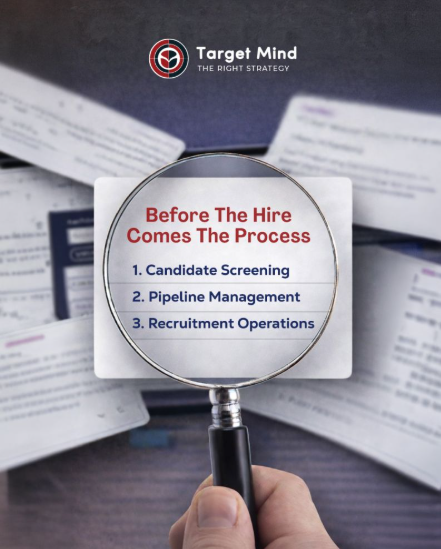
One of the biggest delays in recruitment happens during candidate screening.
Many companies receive a large number of applications, but only a small percentage actually match the job requirements.
This means recruiters often spend hours going through resumes, shortlisting candidates, and conducting initial screenings.
By the time qualified candidates are identified, days — sometimes weeks — have already passed.
During this delay, strong candidates may accept offers from other companies.
So the hiring process starts again.
Coordination Is Slowing Everything Down
𝗔𝗻𝗼𝘁𝗵𝗲𝗿 𝗺𝗮𝗷𝗼𝗿 𝗰𝗵𝗮𝗹𝗹𝗲𝗻𝗴𝗲 𝗶𝘀 𝗶𝗻𝘁𝗲𝗿𝘃𝗶𝗲𝘄 𝗰𝗼𝗼𝗿𝗱𝗶𝗻𝗮𝘁𝗶𝗼𝗻.
Scheduling interviews between candidates, hiring managers, and HR teams can be surprisingly complicated.
Emails go back and forth.
Calendars don’t match.
Interviews get rescheduled.
Even a small delay at this stage can push the hiring timeline further.
Multiply this by multiple roles and multiple candidates, and the process quickly becomes inefficient.
𝗧𝗵𝗲 𝗥𝗲𝗮𝗹 𝗜𝘀𝘀𝘂𝗲: 𝗜𝗻𝗲𝗳𝗳𝗶𝗰𝗶𝗲𝗻𝘁 𝗛𝗶𝗿𝗶𝗻𝗴 𝗦𝘆𝘀𝘁𝗲𝗺𝘀
In many organizations, recruitment processes were built gradually over time rather than designed intentionally.
Different tools, spreadsheets, job portals, and communication channels are used simultaneously.
Without a clear structure, recruitment becomes reactive instead of strategic.
Recruiters are constantly putting out fires instead of focusing on building a strong pipeline of talent.
This is why many companies feel like their recruitment teams are always busy but progress still feels slow.
𝗛𝗼𝘄 𝗥𝗣𝗢 𝗖𝗵𝗮𝗻𝗴𝗲𝘀 𝘁𝗵𝗲 𝗛𝗶𝗿𝗶𝗻𝗴 𝗣𝗿𝗼𝗰𝗲𝘀𝘀:
This is where Recruitment Process Outsourcing (RPO) becomes valuable.
RPO allows organizations to outsource specific parts of the recruitment process to specialized teams who focus entirely on improving efficiency.
Instead of recruiters managing everything internally, the process becomes more structured and streamlined.
An RPO model can support areas such as:
• Candidate sourcing
• Resume screening
• Talent pipeline development
• Interview coordination
• Recruitment reporting and analytics
By handling these operational components, RPO frees internal recruiters to focus on higher-value activities like candidate engagement and final hiring decisions.
Faster Hiring Without Overloading Your Team
When the recruitment process becomes structured, the difference is noticeable.
Recruiters spend less time on repetitive tasks.
Hiring managers receive better shortlisted candidates.
Candidates move through the process faster.
Most importantly, hiring becomes predictable and scalable.
Instead of reacting to hiring needs, companies can build a consistent pipeline of qualified talent.