

𝗜𝗻𝘁𝗿𝗼𝗱𝘂𝗰𝘁𝗶𝗼𝗻
In a data-driven business environment, organizations generate enormous amounts of information every day. From financial reports and customer interactions to market trends and operational performance, data has become one of the most valuable business assets.
However, collecting data is only the first step. The real challenge lies in understanding what that data means and how it can support better business decisions.
This is where 𝗞𝗻𝗼𝘄𝗹𝗲𝗱𝗴𝗲 𝗣𝗿𝗼𝗰𝗲𝘀𝘀 𝗢𝘂𝘁𝘀𝗼𝘂𝗿𝗰𝗶𝗻𝗴 (𝗞𝗣𝗢) plays an important role. By combining specialized expertise, research capabilities, and analytical knowledge, KPO helps businesses transform raw information into meaningful insights and strategic opportunities.
𝗪𝗵𝗮𝘁 𝗜𝘀 𝗞𝗣𝗢 𝗮𝗻𝗱 𝗪𝗵𝘆 𝗗𝗼𝗲𝘀 𝗜𝘁 𝗠𝗮𝘁𝘁𝗲𝗿?
Knowledge Process Outsourcing (KPO) refers to outsourcing knowledge-intensive activities that require specialized expertise, analytical thinking, and professional judgment.
Unlike traditional outsourcing, which generally focuses on routine and repetitive tasks, KPO involves activities that contribute directly to business analysis, planning, and decision-making.
It enables organizations to access skilled professionals, advanced research capabilities, and specialized knowledge without having to build every capability internally.
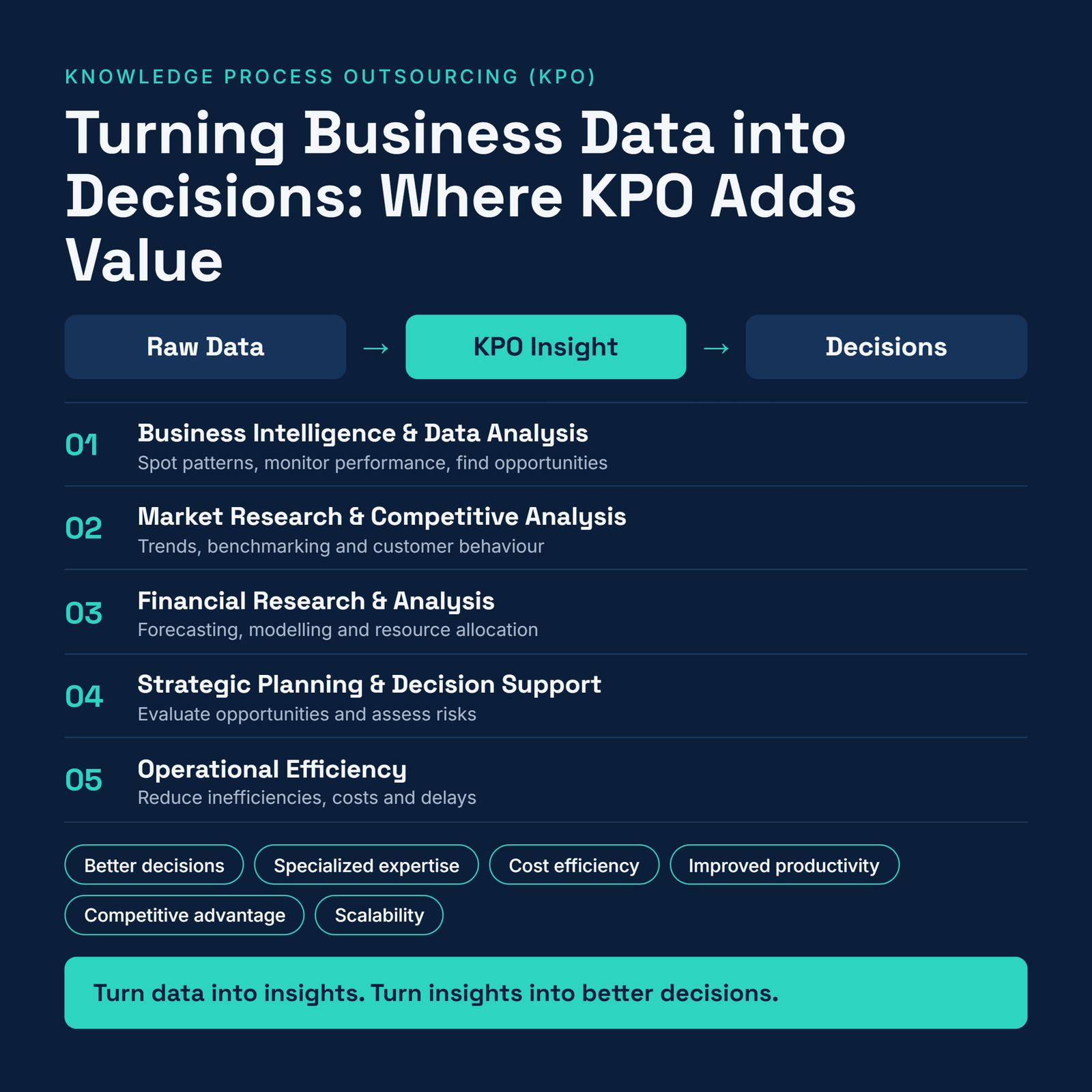
𝗪𝗵𝗲𝗿𝗲 𝗗𝗼𝗲𝘀 𝗞𝗣𝗢 𝗔𝗱𝗱 𝗩𝗮𝗹𝘂𝗲?
𝟭. 𝗕𝘂𝘀𝗶𝗻𝗲𝘀𝘀 𝗜𝗻𝘁𝗲𝗹𝗹𝗶𝗴𝗲𝗻𝗰𝗲 𝗮𝗻𝗱 𝗗𝗮𝘁𝗮 𝗔𝗻𝗮𝗹𝘆𝘀𝗶𝘀
Businesses often have access to large volumes of data but lack the resources or expertise to extract meaningful insights.
KPO professionals help analyze business information, identify patterns, monitor performance, and develop reports that support informed decisions.
This allows management teams to understand what is working, identify challenges, and recognize opportunities for improvement.
𝟮. 𝗠𝗮𝗿𝗸𝗲𝘁 𝗥𝗲𝘀𝗲𝗮𝗿𝗰𝗵 𝗮𝗻𝗱 𝗖𝗼𝗺𝗽𝗲𝘁𝗶𝘁𝗶𝘃𝗲 𝗔𝗻𝗮𝗹𝘆𝘀𝗶s
Understanding the market is essential for sustainable business growth.
KPO supports organizations through market research, industry analysis, competitor benchmarking, and customer behaviour studies.
These insights help businesses identify emerging trends, understand customer expectations, evaluate competitors, and make more informed strategic decisions.
𝟯. 𝗙𝗶𝗻𝗮𝗻𝗰𝗶𝗮𝗹 𝗥𝗲𝘀𝗲𝗮𝗿𝗰𝗵 𝗮𝗻𝗱 𝗔𝗻𝗮𝗹𝘆𝘀𝗶𝘀
Financial information plays a critical role in business planning and investment decisions.
KPO services can support financial analysis, budgeting research, forecasting, financial modelling, and performance evaluation.
With accurate and structured financial insights, businesses can improve resource allocation and make more confident financial decisions.
𝟰. 𝗦𝘁𝗿𝗮𝘁𝗲𝗴𝗶𝗰 𝗣𝗹𝗮𝗻𝗻𝗶𝗻𝗴 𝗮𝗻𝗱 𝗗𝗲𝗰𝗶𝘀𝗶𝗼𝗻 𝗦𝘂𝗽𝗽𝗼𝗿𝘁
Business leaders need reliable information to make decisions about expansion, investment, operations, and long-term growth.
KPO provides research-backed insights that help organizations evaluate opportunities, assess potential risks, and develop effective business strategies.
It transforms complex information into practical recommendations that support leadership decisions.
𝟱. 𝗢𝗽𝗲𝗿𝗮𝘁𝗶𝗼𝗻𝗮𝗹 𝗘𝗳𝗳𝗶𝗰𝗶𝗲𝗻𝗰𝘆 𝗮𝗻𝗱 𝗣𝗲𝗿𝗳𝗼𝗿𝗺𝗮𝗻𝗰𝗲 𝗜𝗺𝗽𝗿𝗼𝘃𝗲𝗺𝗲𝗻𝘁
KPO can also help organizations understand operational performance and identify areas where processes can be improved.
Through data analysis, performance monitoring, and process research, businesses can identify inefficiencies, reduce unnecessary costs, and improve productivity.
𝗞𝗲𝘆 𝗕𝘂𝘀𝗶𝗻𝗲𝘀𝘀 𝗕𝗲𝗻𝗲𝗳𝗶𝘁𝘀 𝗼𝗳 𝗞𝗣𝗢
Integrating KPO into business operations can deliver several advantages:
𝗕𝗲𝘁𝘁𝗲𝗿 𝗱𝗲𝗰𝗶𝘀𝗶𝗼𝗻-𝗺𝗮𝗸𝗶𝗻𝗴: Access to reliable, research-driven insights.
𝗦𝗽𝗲𝗰𝗶𝗮𝗹𝗶𝘇𝗲𝗱 𝗲𝘅𝗽𝗲𝗿𝘁𝗶𝘀𝗲: Benefit from professionals with industry-specific knowledge.
𝗖𝗼𝘀𝘁 𝗲𝗳𝗳𝗶𝗰𝗶𝗲𝗻𝗰𝘆: Access specialized capabilities without building every function in-house.
𝗜𝗺𝗽𝗿𝗼𝘃𝗲𝗱 𝗽𝗿𝗼𝗱𝘂𝗰𝘁𝗶𝘃𝗶𝘁𝘆: Allow internal teams to focus on core business priorities.
𝗖𝗼𝗺𝗽𝗲𝘁𝗶𝘁𝗶𝘃𝗲 𝗮𝗱𝘃𝗮𝗻𝘁𝗮𝗴𝗲: Identify market opportunities and respond to changing business conditions.
𝗦𝗰𝗮𝗹𝗮𝗯𝗶𝗹𝗶𝘁𝘆: Access additional research and analytical support as business requirements evolve.
𝗙𝗿𝗼𝗺 𝗗𝗮𝘁𝗮 𝘁𝗼 𝗕𝘂𝘀𝗶𝗻𝗲𝘀𝘀 𝗜𝗻𝘁𝗲𝗹𝗹𝗶𝗴𝗲𝗻𝗰𝗲
The real strength of KPO lies in connecting information with action.
Consider a business planning to enter a new market. It may have access to sales figures, customer data, industry reports, and competitor information. However, these individual data points may not provide a complete picture.
Through KPO-supported research and analysis, the business can evaluate market demand, understand customer preferences, assess competition, and identify potential risks.
The result is a more informed market-entry strategy supported by meaningful insights rather than assumptions.
𝗖𝗼𝗻𝗰𝗹𝘂𝘀𝗶𝗼𝗻: 𝗠𝗮𝗸𝗶𝗻𝗴 𝗗𝗮𝘁𝗮 𝗪𝗼𝗿𝗸 𝗳𝗼𝗿 𝗬𝗼𝘂𝗿 𝗕𝘂𝘀𝗶𝗻𝗲𝘀𝘀
Data alone does not create business value. Its value comes from the knowledge, analysis, and decisions built around it.
KPO helps organizations bridge the gap between information and action by providing specialized expertise, analytical support, and research-driven intelligence.
In a business environment where informed decisions can create a significant competitive advantage, KPO is more than an outsourcing solution. It is a strategic resource for smarter planning, improved performance, and sustainable growth.
𝗧𝘂𝗿𝗻 𝘆𝗼𝘂𝗿 𝗯𝘂𝘀𝗶𝗻𝗲𝘀𝘀 𝗱𝗮𝘁𝗮 𝗶𝗻𝘁𝗼 𝗺𝗲𝗮𝗻𝗶𝗻𝗴𝗳𝘂𝗹 𝗶𝗻𝘀𝗶𝗴𝗵𝘁𝘀. 𝗧𝘂𝗿𝗻 𝘁𝗵𝗼𝘀𝗲 𝗶𝗻𝘀𝗶𝗴𝗵𝘁𝘀 𝗶𝗻𝘁𝗼 𝗯𝗲𝘁𝘁𝗲𝗿 𝗱𝗲𝗰𝗶𝘀𝗶𝗼𝗻𝘀.