

In today’s competitive online landscape, digital marketing is no longer just about running advertisements or posting regularly on social media. It’s about building a strong digital presence that helps your business attract the right audience, establish trust, and achieve long-term growth.
Many businesses rush to launch their first digital marketing campaign without preparing the foundation. However, the success of any campaign often depends on what happens before it goes live.
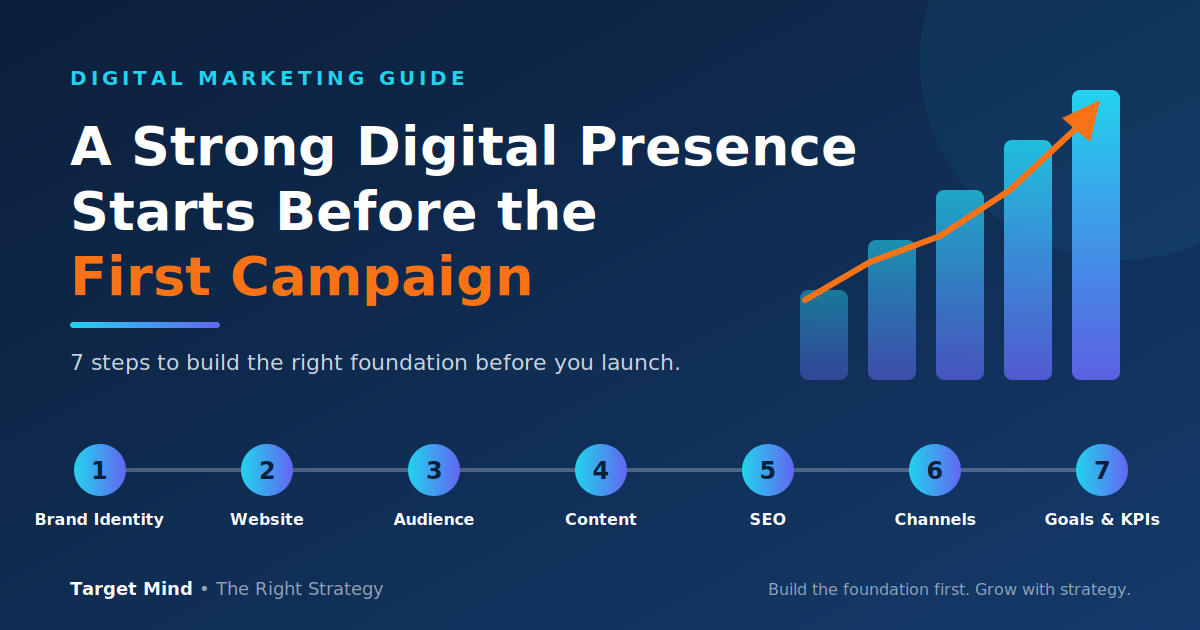
From defining your brand identity to optimizing your website, every step plays an important role in shaping how your audience discovers and experiences your business.
𝗪𝗵𝗮𝘁 𝗜𝘀 𝗮 𝗦𝘁𝗿𝗼𝗻𝗴 𝗗𝗶𝗴𝗶𝘁𝗮𝗹 𝗣𝗿𝗲𝘀𝗲𝗻𝗰𝗲?
A strong digital presence is how your business appears, communicates, and engages with people across online platforms. It includes your website, search engine visibility, social media profiles, online content, and overall brand reputation.
A well-planned digital presence helps potential customers understand who you are, what you offer, and why they should choose your business.
More importantly, it creates a consistent experience across digital touchpoints, making it easier for customers to connect with your brand.
𝟭. 𝗦𝘁𝗮𝗿𝘁 𝘄𝗶𝘁𝗵 𝗮 𝗖𝗹𝗲𝗮𝗿 𝗕𝗿𝗮𝗻𝗱 𝗜𝗱𝗲𝗻𝘁𝗶𝘁𝘆
Before investing in digital marketing, define what your brand represents. Your brand identity should communicate your business values, unique selling points, and the problems you solve for your customers.
A consistent brand voice, visual identity, and message help your business stand out in a crowded market.
When your audience clearly understands what makes your brand different, your marketing efforts become more focused and effective.
𝟮. 𝗕𝘂𝗶𝗹𝗱 𝗮 𝗪𝗲𝗯𝘀𝗶𝘁𝗲 𝗧𝗵𝗮𝘁 𝗖𝗼𝗻𝘃𝗲𝗿𝘁𝘀
Your website is often one of the first places potential customers visit to learn about your business. It should do more than look attractive; it should provide a smooth, informative, and user-friendly experience.
𝗔 𝘀𝘁𝗿𝗼𝗻𝗴 𝗯𝘂𝘀𝗶𝗻𝗲𝘀𝘀 𝘄𝗲𝗯𝘀𝗶𝘁𝗲 𝘀𝗵𝗼𝘂𝗹𝗱 𝗶𝗻𝗰𝗹𝘂𝗱𝗲:
• Clear and engaging website content.
• Mobile-friendly and responsive design.
• Fast loading speeds and intuitive navigation.
• Search engine optimization (SEO).
• Relevant calls to action that guide visitors toward the next step.
• Trust-building elements, such as testimonials, case studies, or contact information.
A well-optimized website helps turn online visitors into meaningful leads and potential customers.
𝟯. 𝗨𝗻𝗱𝗲𝗿𝘀𝘁𝗮𝗻𝗱 𝗬𝗼𝘂𝗿 𝗧𝗮𝗿𝗴𝗲𝘁 𝗔𝘂𝗱𝗶𝗲𝗻𝗰𝗲
Effective digital marketing starts with understanding the people you want to reach.
Identify your ideal customers, their needs, common challenges, online behavior, and the questions they ask before making a purchase.
Audience research helps you create more relevant content, choose suitable marketing channels, and develop campaigns that connect with customer needs.
Instead of trying to reach everyone, focus on reaching the people most likely to benefit from your products or services.
𝟰. 𝗖𝗿𝗲𝗮𝘁𝗲 𝗮 𝗖𝗼𝗻𝘁𝗲𝗻𝘁 𝗦𝘁𝗿𝗮𝘁𝗲𝗴𝘆 𝗕𝗲𝗳𝗼𝗿𝗲 𝗬𝗼𝘂 𝗟𝗮𝘂𝗻𝗰𝗵
Content plays a vital role in building brand awareness and establishing credibility. However, publishing content without a clear plan can lead to inconsistent messaging and limited results.
Develop a content strategy that aligns with your business goals and audience interests.
Consider creating:
• Educational blog articles that answer customer questions.
• Social media posts that encourage engagement.
• Website content that clearly explains your services.
• Case studies that demonstrate your expertise.
• Informative videos and visual content that simplify complex topics.
A consistent, value-driven content strategy helps build trust with your audience before you ask them to take action.
𝟱. 𝗜𝗺𝗽𝗿𝗼𝘃𝗲 𝗦𝗲𝗮𝗿𝗰𝗵 𝗘𝗻𝗴𝗶𝗻𝗲 𝗩𝗶𝘀𝗶𝗯𝗶𝗹𝗶𝘁𝘆 𝘄𝗶𝘁𝗵 𝗦𝗘𝗢
Search engine optimization helps potential customers discover your business when they search online for relevant products, services, or information.
Before launching a campaign, make sure your website has a solid SEO foundation. This includes researching relevant keywords, optimizing page titles and headings, improving website structure, creating useful content, and addressing technical SEO issues.
SEO is a long-term investment. While results can take time, a well-maintained SEO strategy can support sustainable organic traffic and reduce reliance on paid advertising alone.
𝟲. 𝗖𝗵𝗼𝗼𝘀𝗲 𝘁𝗵𝗲 𝗥𝗶𝗴𝗵𝘁 𝗗𝗶𝗴𝗶𝘁𝗮𝗹 𝗠𝗮𝗿𝗸𝗲𝘁𝗶𝗻𝗴 𝗖𝗵𝗮𝗻𝗻𝗲𝗹𝘀
Not every digital platform is right for every business. The best channels depend on your target audience, industry, objectives, and available resources.
For example, SEO and content marketing can help businesses attract people actively researching solutions. Social media can support brand awareness and community engagement, while paid advertising can help reach specific audiences and generate leads.
Choose channels based on where your audience spends time and how they make purchasing decisions. A focused strategy is often more effective than trying to maintain a presence everywhere.
𝟳. 𝗦𝗲𝘁 𝗖𝗹𝗲𝗮𝗿 𝗚𝗼𝗮𝗹𝘀 𝗮𝗻𝗱 𝗧𝗿𝗮𝗰𝗸 𝗣𝗲𝗿𝗳𝗼𝗿𝗺𝗮𝗻𝗰𝗲
Digital marketing works best when every activity supports a measurable objective.
Before launching a campaign, determine what success means for your business. Your goals might include increasing website traffic, generating qualified leads, improving engagement, growing online sales, or increasing brand awareness.
Establish relevant key performance indicators (KPIs), such as:
• Organic website traffic.
• Conversion rate.
• Cost per lead.
• Click-through rate.
• Customer acquisition cost.
• Return on advertising spend.
Tracking the right metrics helps you understand performance, identify opportunities for improvement, and make informed marketing decisions.
Common Mistakes to Avoid Before Launching a Campaign
Even a well-funded campaign can struggle when the basics are overlooked. Avoid these common mistakes:
• Launching advertisements without a clear objective.
• Targeting an audience that is too broad.
• Sending traffic to an outdated or poorly optimized website.
• Publishing content without a consistent strategy.
• Ignoring mobile users and website performance.
• Failing to install or configure appropriate analytics and conversion tracking.
• Expecting immediate results from long-term activities such as SEO.
Addressing these issues early can help you use your marketing budget more effectively and create a better experience for potential customers.
𝗖𝗼𝗻𝗰𝗹𝘂𝘀𝗶𝗼𝗻: 𝗕𝘂𝗶𝗹𝗱 𝘁𝗵𝗲 𝗙𝗼𝘂𝗻𝗱𝗮𝘁𝗶𝗼𝗻 𝗕𝗲𝗳𝗼𝗿𝗲 𝗬𝗼𝘂 𝗦𝗰𝗮𝗹𝗲
A successful digital marketing strategy begins with preparation, not promotion.
When your brand identity is clear, your website is optimized, your content provides value, and your audience is well understood, every campaign has a stronger foundation to build upon.
Digital marketing is not simply about getting more clicks or impressions. It’s about creating meaningful connections, earning customer trust, and turning online visibility into measurable business growth.
𝗕𝘂𝗶𝗹𝗱 𝘁𝗵𝗲 𝗳𝗼𝘂𝗻𝗱𝗮𝘁𝗶𝗼𝗻 𝗳𝗶𝗿𝘀𝘁. 𝗟𝗮𝘂𝗻𝗰𝗵 𝘄𝗶𝘁𝗵 𝗽𝘂𝗿𝗽𝗼𝘀𝗲. 𝗚𝗿𝗼𝘄 𝘄𝗶𝘁𝗵 𝘀𝘁𝗿𝗮𝘁𝗲𝗴𝘆.
Whether you’re establishing a new online presence or improving an existing one, investing in the right digital marketing fundamentals can help position your business for sustainable success.
𝗥𝗲𝗮𝗱𝘆 𝘁𝗼 𝘀𝘁𝗿𝗲𝗻𝗴𝘁𝗵𝗲𝗻 𝘆𝗼𝘂𝗿 𝗱𝗶𝗴𝗶𝘁𝗮𝗹 𝗽𝗿𝗲𝘀𝗲𝗻𝗰𝗲? Start by evaluating your website, content, SEO, and marketing goals, then build a strategy that brings them together.